Many people decide to have a health check but are unsure what it should actually include.
A health check is not a single fixed list of tests. What is appropriate depends on age, medical history, family history, lifestyle and individual risk factors.
The useful starting point is a conversation with a qualified healthcare professional.
Why a general screening list is not enough
Two people of the same age may need different investigations.
Someone with a family history of diabetes may need different attention from someone with a history of high blood pressure or a previous medical condition.
This is why a screening package should be matched to the person rather than chosen at random.
Common areas a health check may cover
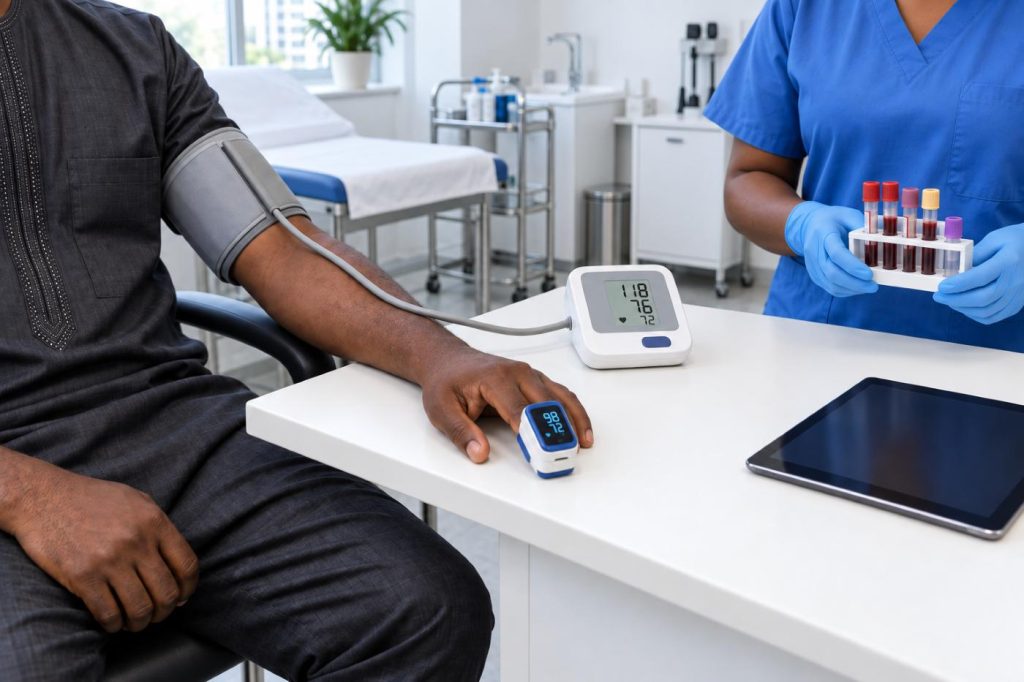
Depending on clinical judgement, a health assessment may look at general blood health, organ function, metabolic indicators and cardiovascular measures.
Blood tests can provide information about several body systems at once, which is why they often form part of a check.
Imaging may be included where there is a specific clinical question rather than as a matter of routine.
Laboratory testing
Laboratory investigations can support assessment of blood count, kidney and liver function, blood sugar, cholesterol and hormonal indicators.
Rapid Diagnostics provides haematology, clinical chemistry, microbiology, histology and cytology, immunology and hormonal assays.
Cardiac assessment
Where cardiovascular health is a concern, an ECG may be discussed alongside blood-pressure assessment and relevant laboratory testing.
Rapid Diagnostics provides ECG and Holter monitoring.
Imaging where appropriate
Imaging is not automatically part of every health check.
Where it is indicated, ultrasound, X-ray, CT or MRI may be recommended by a clinician based on symptoms, history or findings from other tests.
Preparation matters
Some tests require fasting. Others do not. Requirements depend on the combination of tests requested.
Instructions are provided when your appointment is booked, which avoids guesswork and wasted journeys.
What to do with the results
Results should be reviewed with a healthcare professional who can interpret them alongside your history.
A value slightly outside a reference range is not automatically a diagnosis, and a normal result is a snapshot rather than a guarantee.
Rapid Diagnostics provides structured health packages including executive health checks, with contents confirmed by our team.
Rapid Diagnostics guidance: Discuss which tests are appropriate for you with a qualified healthcare professional before booking a screening package.
Planning a health check? Speak with our team about the right package.